
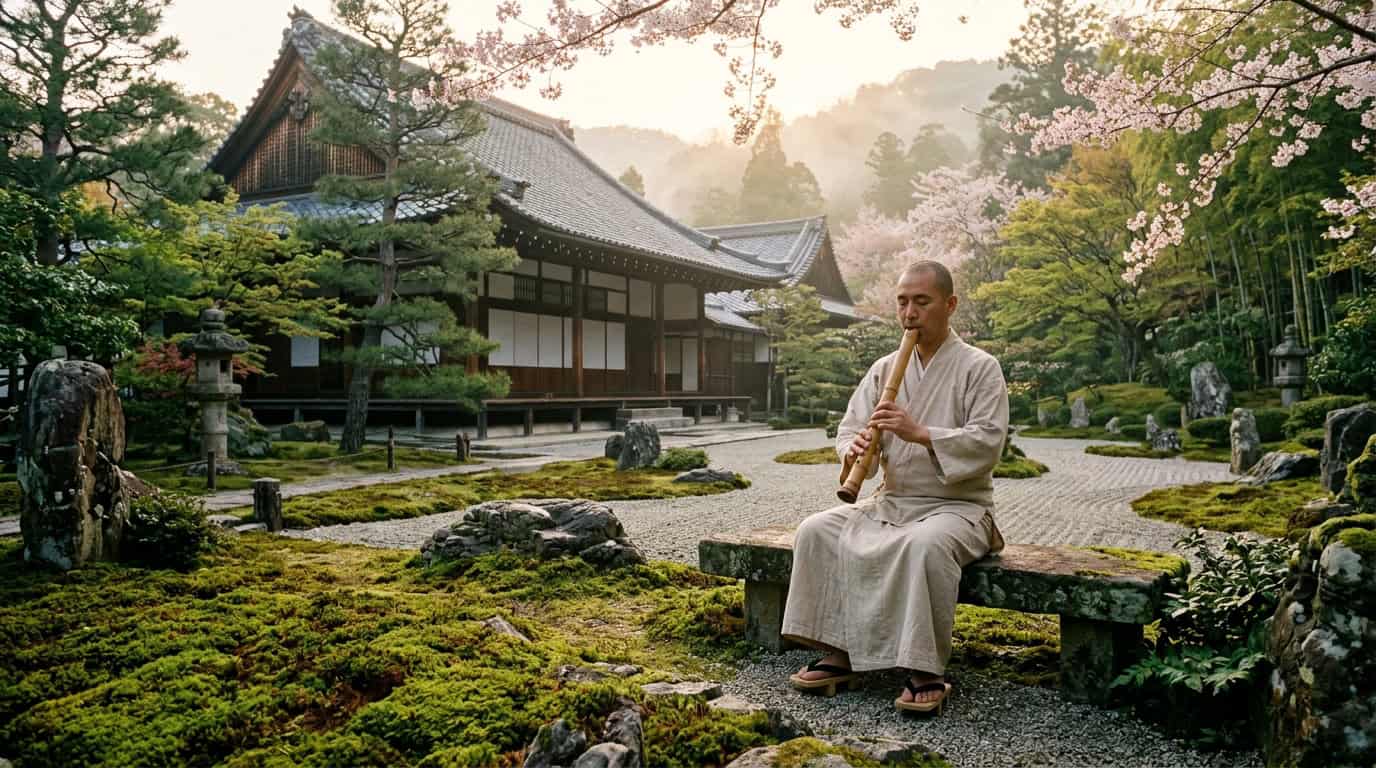

Monge peregrino Komuso com cesto tengai e flauta Shakuhachi em trilha de bambus e pedras
THE SYMBOL · THE KOMUSO MONKS

Coming from nowhere, going nowhere like the wind

In feudal Japan of the Edo period, the wandering monks of the Fuke sect of Zen Buddhism — known as Komuso (monks of emptiness and nothingness) — traveled the roads with a woven rice-straw basket over their heads, called a tengai.

The basket concealed the face to dissolve the ego and worldly identity. In their hands, the Shakuhachi was not considered a musical instrument for entertainment, but a sacred tool of spiritual liberation and contemplation, called Hōki.

For the Komuso monk, playing the bamboo was not making music: it was begging for the spirit, purifying the mind, and listening to the silent voice of the universe.

A single breath. An empty mind. The return to the essential.

THE TRADITION OF BREATH

Suizen: the meditation that becomes air

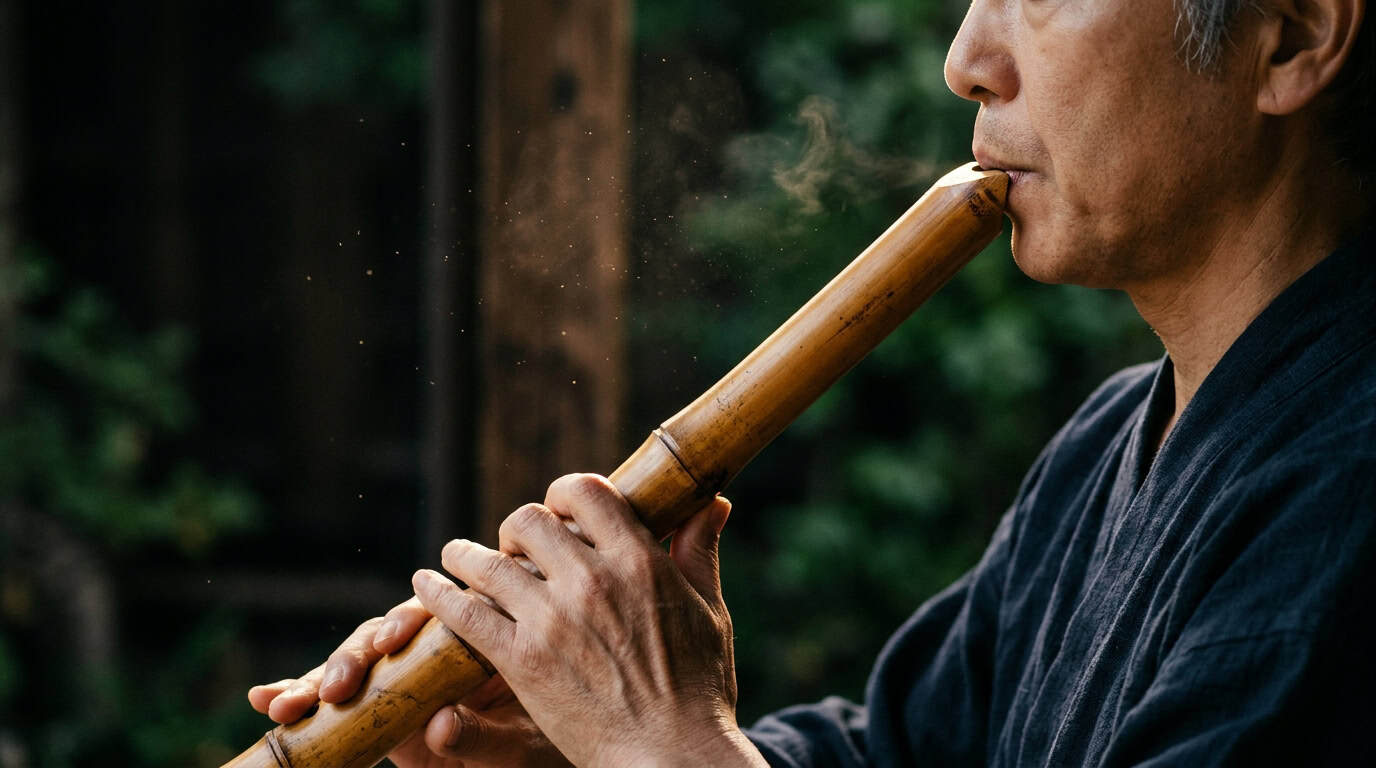
While traditional Buddhism practices Zazen (silent seated meditation), Shakuhachi masters developed Suizen — meditation through the breath.

In the ancestral repertoire of the Honkyoku (original temple pieces), the sound of the flute welcomes the rustic breath of air, the crack of the attack, and the natural resonance of the bamboo. The melody imitates the pure forces of nature: the sudden gust of wind in the leaves, the beating of a heron’s wings, the flow of water over stones.

In the art of the Shakuhachi, the silence between notes — the Japanese concept of Ma (間) — is as alive as the sound itself. The music teaches the mind to rest in the fertile void where everything is born.

To blow the bamboo is to learn to listen to one’s own heart.

Praticante Zen tocando Shakuhachi verticalmente à beira de um lago alpino tranquilo
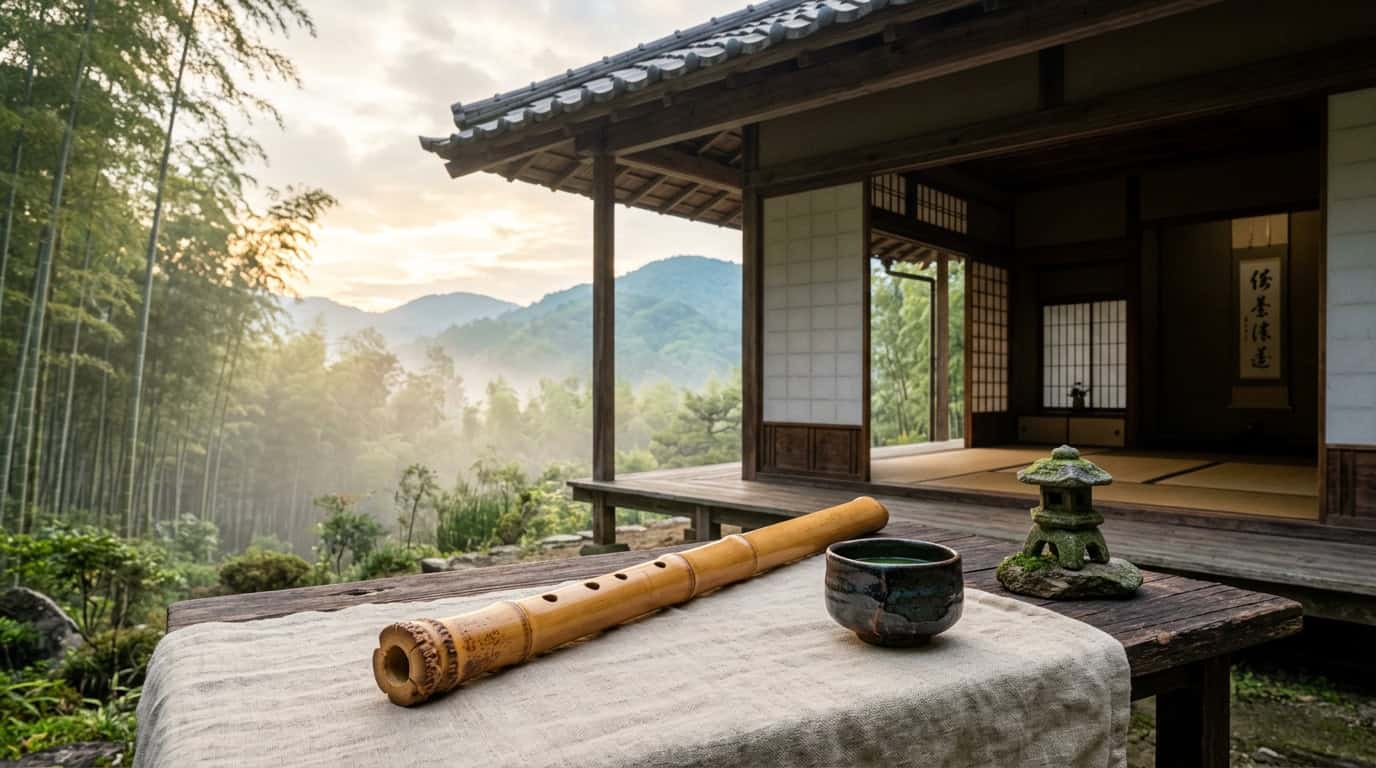
Flauta Shakuhachi em repouso em pavilhão Zen ao amanhecer com montanhas e névoa ao fundo
SONIC EXPERIENCE

The Voices of the Shakuhachi

From the first breath to the deep lows of the void

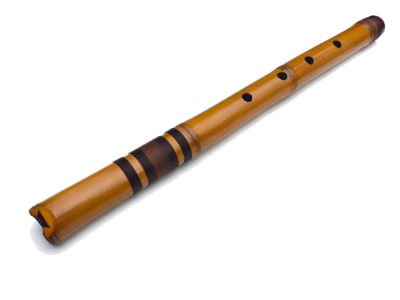
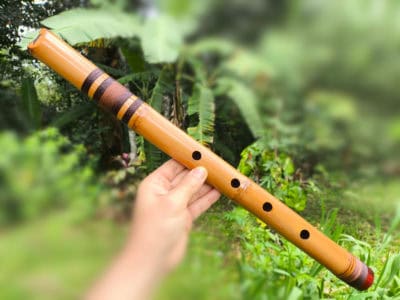
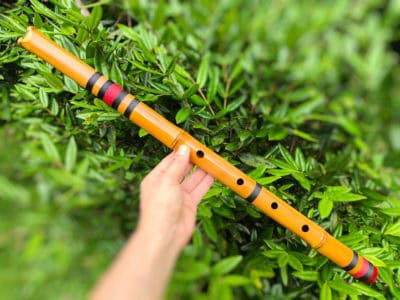
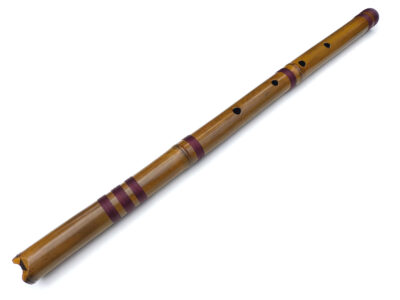
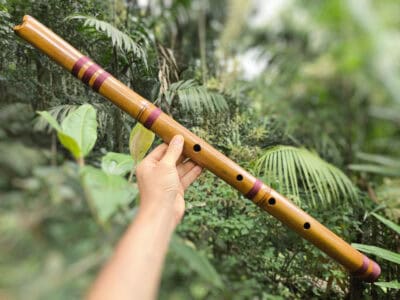
The Shakuhachi has a deep and hypnotic pentatonic scale with 5 holes (4 front and 1 back). Its dimensions define the character and depth of each tuning:

• 1.8 (D): The classic concert tuning (~54 cm). Recommended for those starting with edge blowing and seeking balance and ease of grip.
• 2.0 (C): A medium-low key, extremely velvety and intimate.
• 2.1 (Low B): A long, meditative flute with deep resonance.
• 2.3 (Low A): A cavernous and visceral voice, recommended for practitioners with greater hand span and experience with meditative instruments.

LUTHERIE & RAW MATERIALS

The Ashar Shakuhachi: Precision, Soul, and Accessibility

In Japan, traditional shakuhachis are usually made from Madake bamboo root and coated internally with Urushi lacquer — a process that raises the value to thousands of dollars and demands extreme care regarding allergies and climatic fragility.

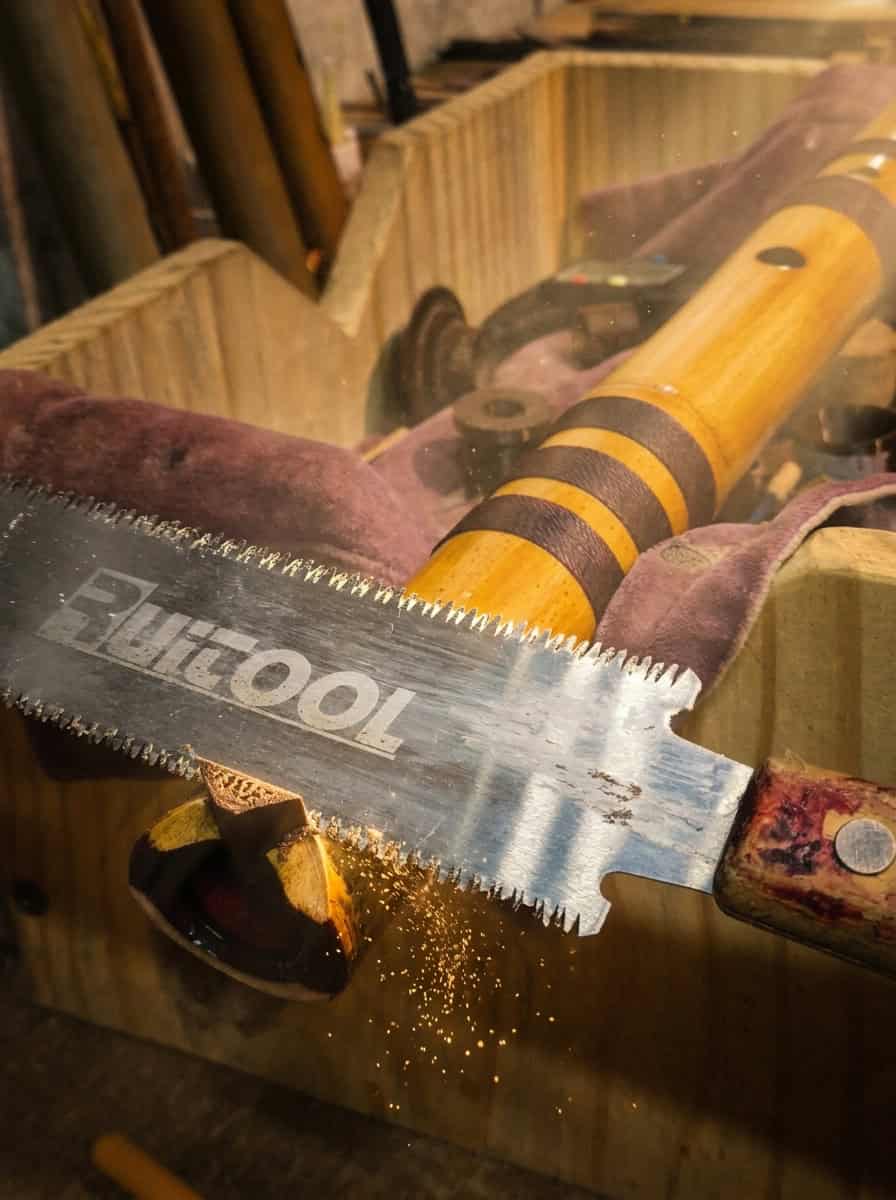
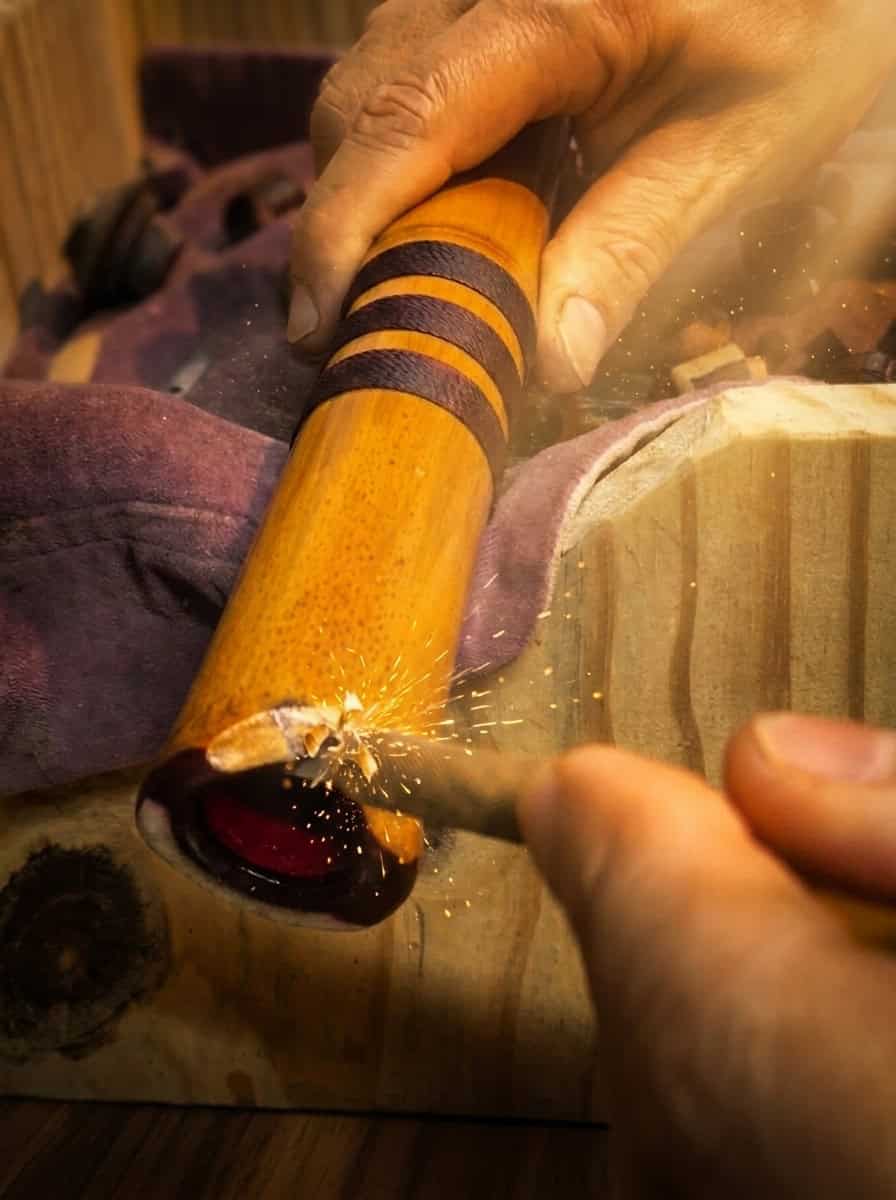
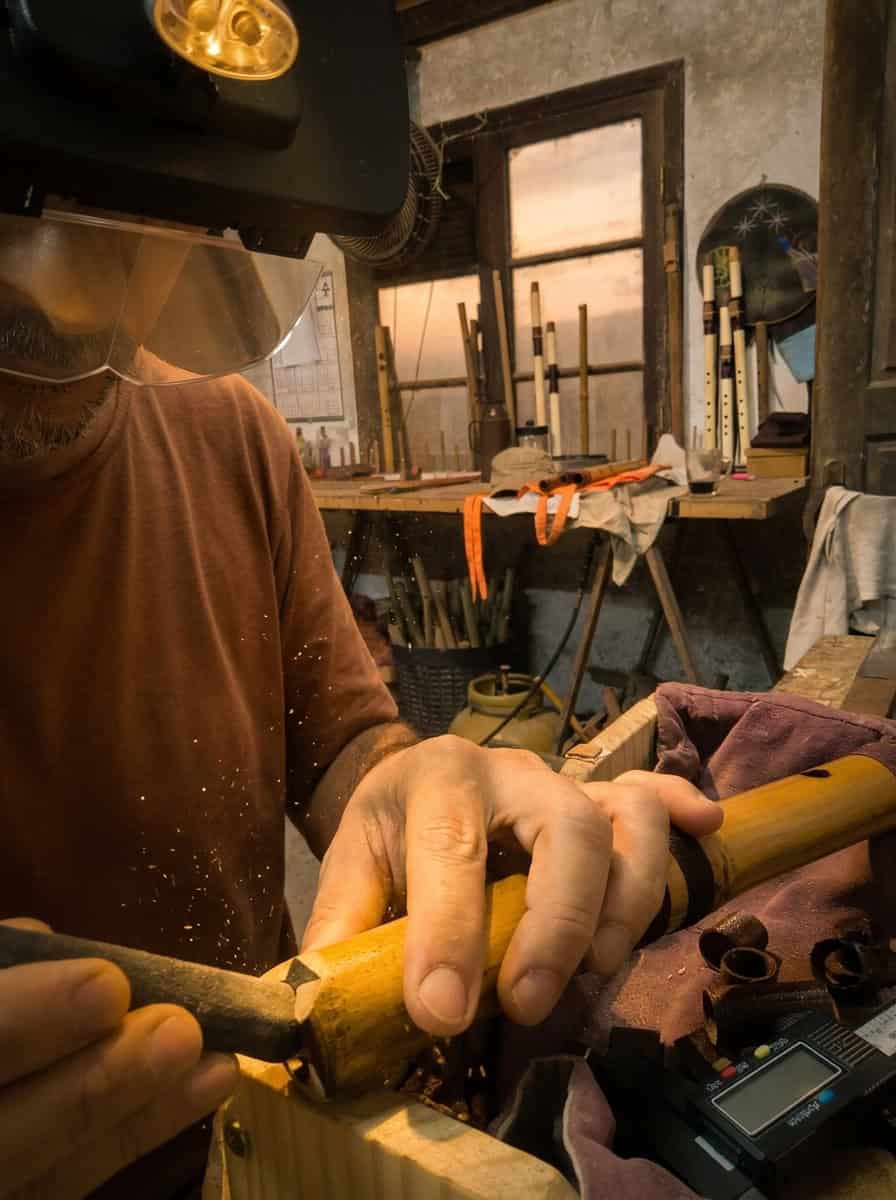
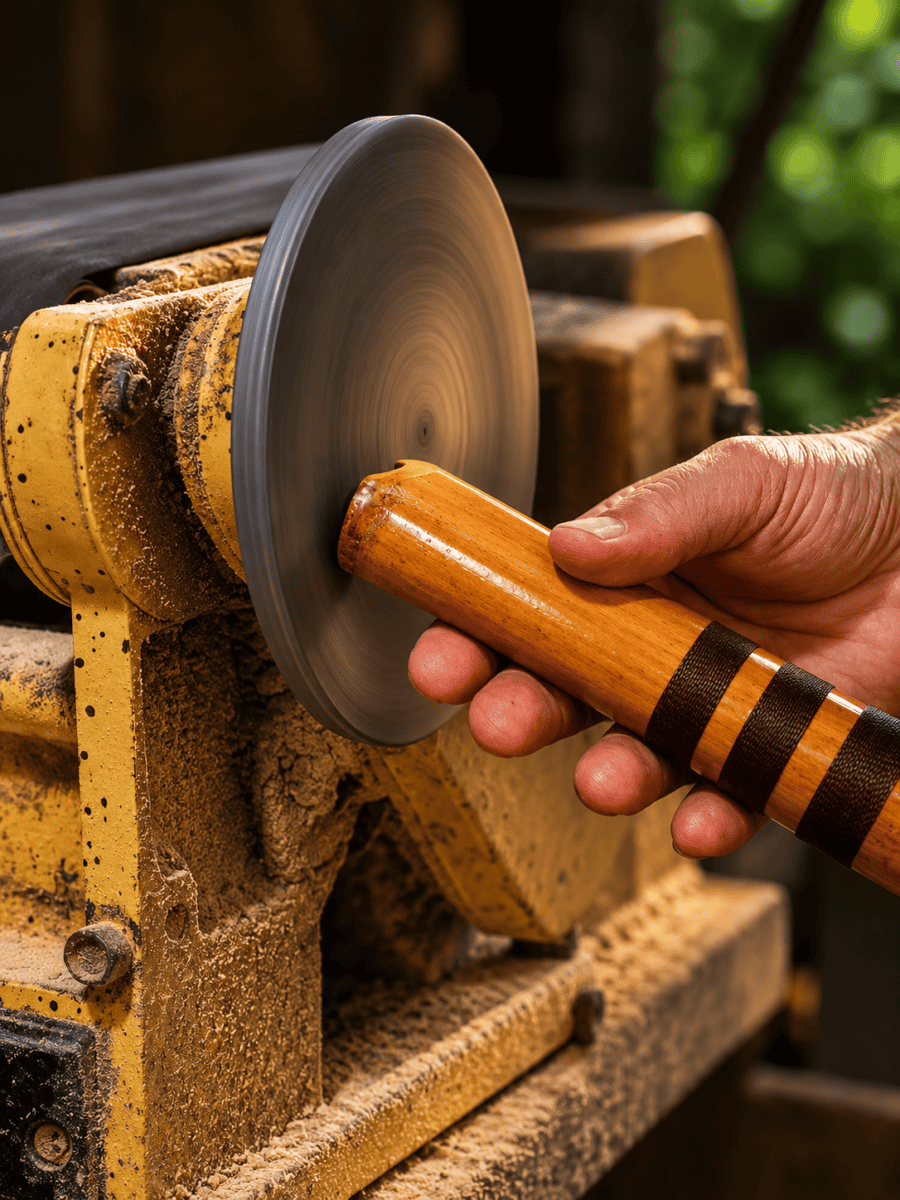
At Flauta Nativa Ashar, we seek a solution of living, conscious, and highly acoustic lutherie: we build the Shakuhachi in the rootless one-piece model (nobekan), using the noble Phyllostachys aurea bamboo grown in Brazil, shade-dried for more than 6 months and heat-cured.

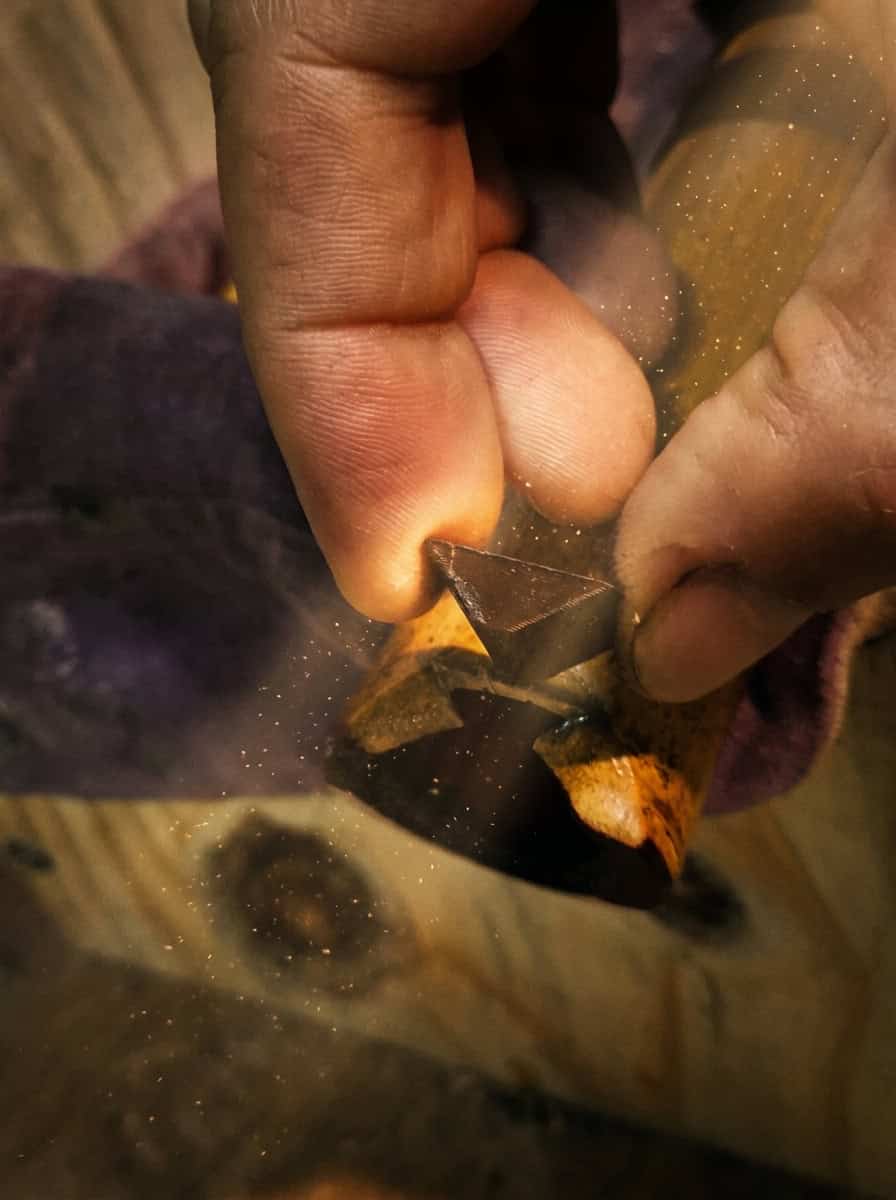
The great differentiator of our flute lies in the calibrated acoustic closure of the foot: a lutherie intervention at the lower end that balances the air backpressure, providing a firm sonic response and allowing the second and third octaves (the Kan highs) to be reached with lightness and without excessive effort.

An instrument of professional quality, safe, stable, and made to be in your hands.

THE ASHAR SHAKUHACHIS

Find your Shakuhachi

Each tuning opens a door to inner silence. From the agility and brilliance of the classic 1.8 (D) to the abyssal and meditative resonance of the 2.3 (Low A), discover the voice that resonates with your breath.

B
(2) R$ 790.00
Previsão de Envio: 12 Feb 2027
D
(1) R$ 590.00
Previsão de Envio: 12 Feb 2027
C
R$ 690.00
Previsão de Envio: 12 Feb 2027
A
(1) R$ 790.00
Previsão de Envio: 12 Feb 2027

The path of bamboo begins with your next breath.

Discover all the details in the store

For those who have never played edge-blown flutes (open embouchure), we recommend starting with the 1.8 (D) or 2.0 (C) tuning. For those who already have experience with edge blowing and seek very low, deep notes, we recommend the 2.1 (Low B) and 2.3 (Low A).