

 $
ASHAR SONIC UNIVERSES
Nay Flute
The ancient voice of the blown reed
One of humanity’s oldest flutes — played in Egypt nearly five thousand years ago, sung by Rumi and tuned to the microtones and maqamat of the Middle East.
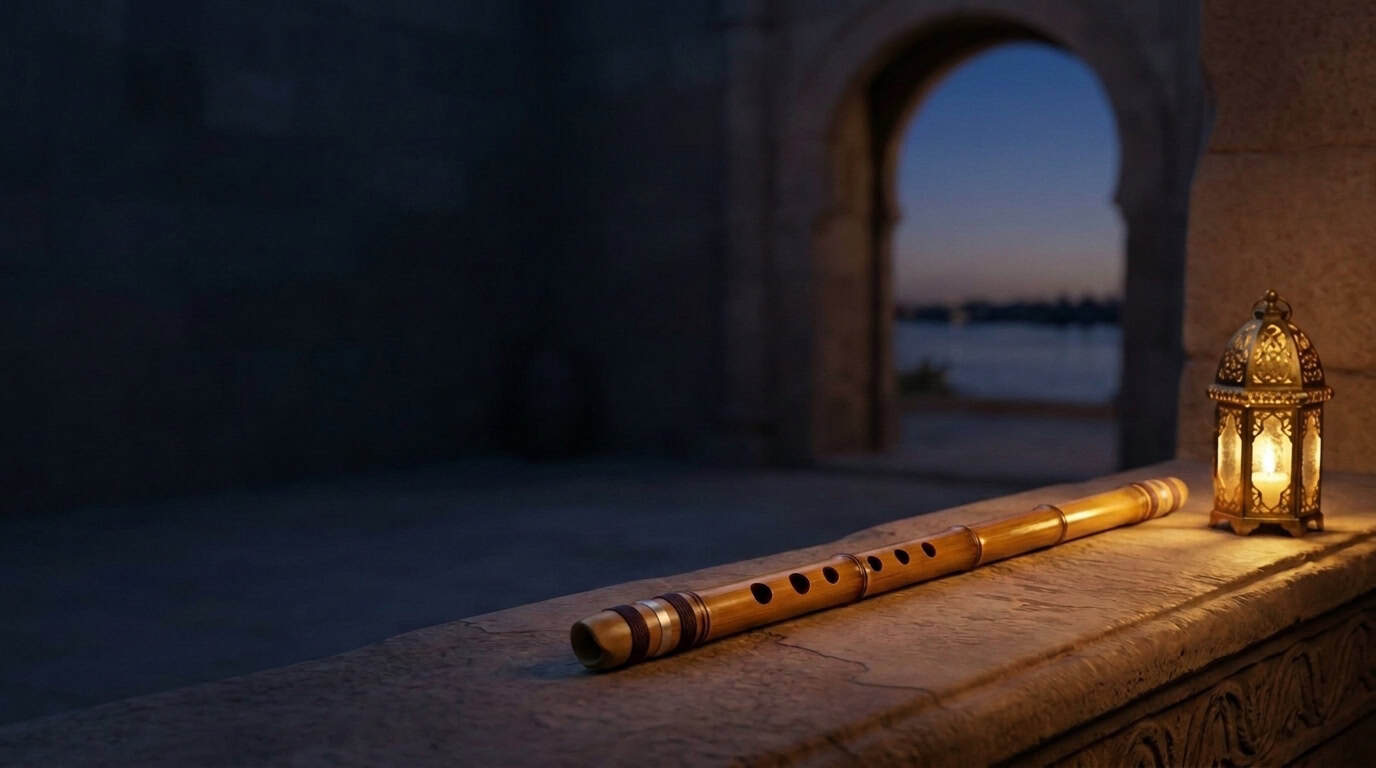
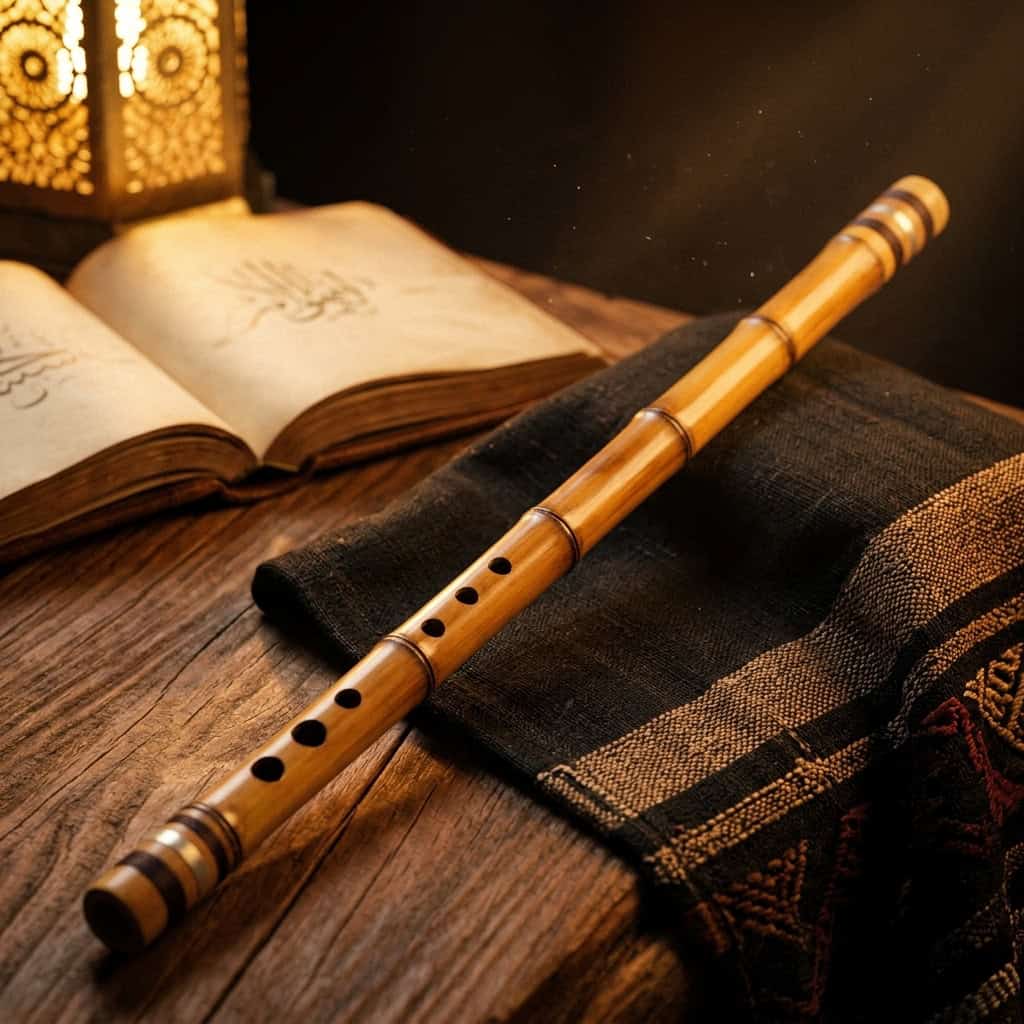
Documented in Egyptian tomb paintings around 2700 BC, the Nay Flute (also known as Ney in the Turkish-Persian tradition) is one of the oldest musical instruments still in continuous use in the world.
In Arabic and Egyptian it is pronounced Nay (“nái”); in Turkish and Persian, Ney (“nêi”) — always referring to the same sacred reed flute.
In the 13th century, the Sufi poet Rumi opened his masterpiece Mathnawi with the famous “Song of the Reed”: cut from the riverbank and hollow within, the bamboo symbolizes the human soul that sighs for its divine origin each time it receives the breath.
Simple in form. Deep as a lament and a prayer.
There are three great schools in the East: the Turkish Ney (with a rigid mouthpiece başpare), the Persian Ney (played between the front teeth) and the Arabic-Egyptian Nay — the tradition followed by Ashar, in which the lips touch the edge of the mouthpiece directly.
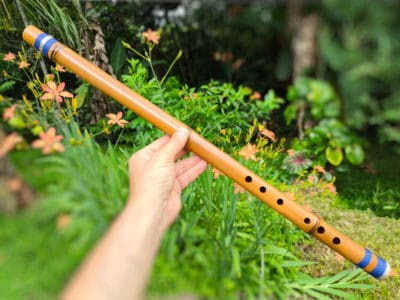
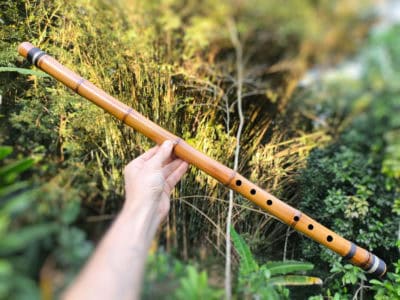
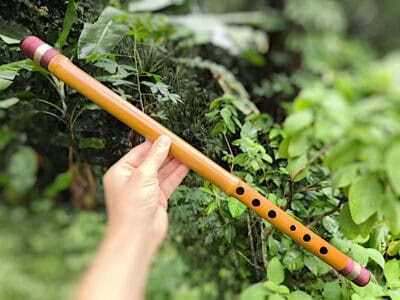
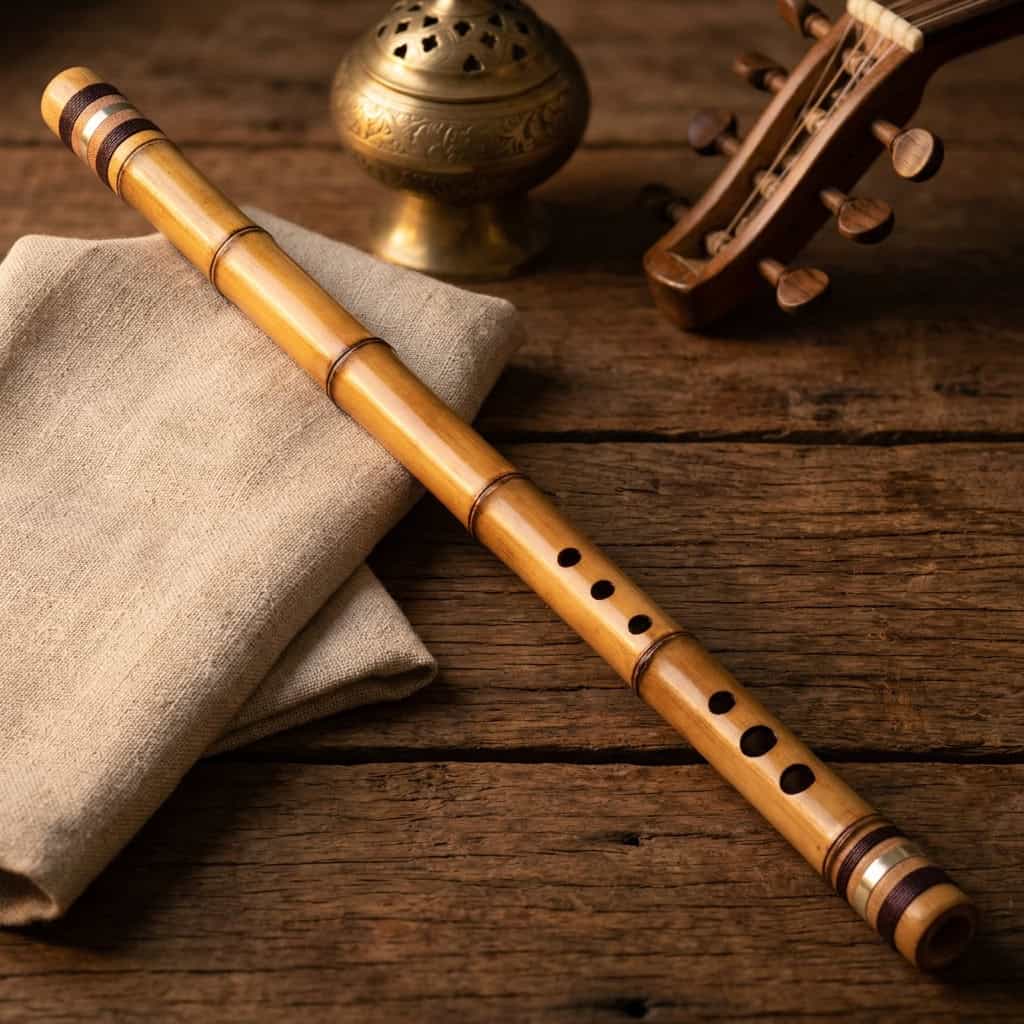
Built from noble Phyllostachys aurea bamboo — shade-dried for at least 6 months, sealed with non-toxic Indian shellac and finished with worked alpaca rings and waxed threads — our Nays unite tradition and contemporary precision: a mouthpiece ending with a live edge that amplifies more clearly the characteristic husky breath of the reed and gives firmness to the high notes, without losing the instrument’s organic soul.
With 7 holes (6 front and 1 rear for the thumb), its scale is adjusted for Arabic music and the 1/4 tones of the maqamat.
Tradition and innovation in the service of the musical experience.
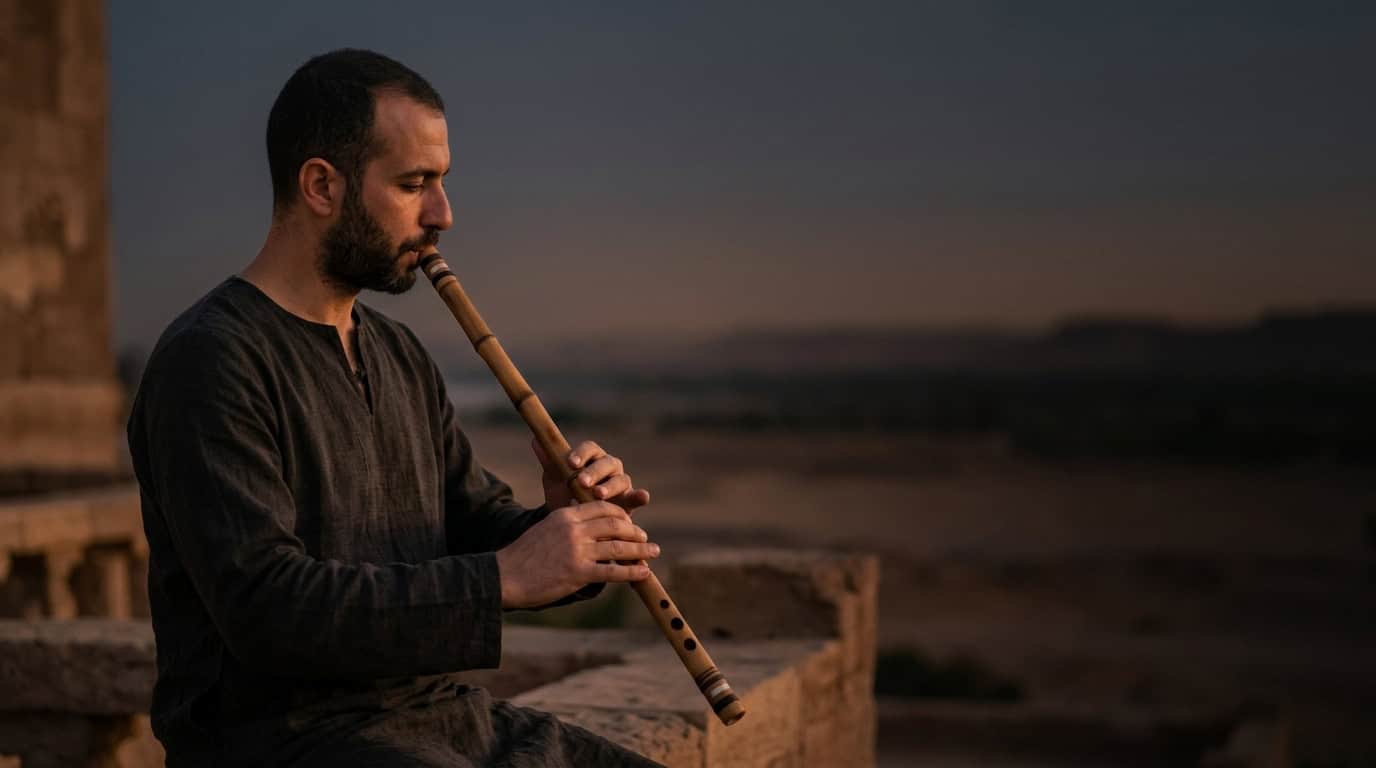
The Nay Flute allows you to reach 3 registers (octaves) with ease and up to 4 registers on the longer flutes and with advanced practice. We chose to work with the tunings that best balance ergonomics and expressiveness:
E is the most compact and recommended for beginners; D is the most used and versatile tuning in Arabic-Egyptian music; and B delivers a longer, velvety and contemplative voice for flutists already familiar with oblique blowing.
Som da Flauta Ney Árabe em Mi (E / Rast D) – Bambu Natural | Flauta Nativa Ashar
Som da flauta Estilo Nay Árabe E
Som da Flauta Estilo Nay Árabe - A baixo
Improviso Flauta Ney Sipürde D
Choose your tuning by the key note (E, D or B) and customize the thread colors on the instrument page.


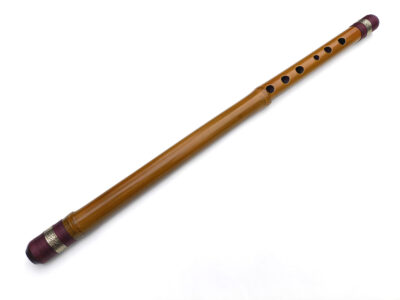
For beginners we recommend the E tuning for its shorter length and more accessible response. For the most versatile classic sound of the Arabic repertoire, we recommend D; and for advanced level, B.