



 $
$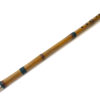
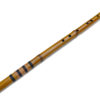


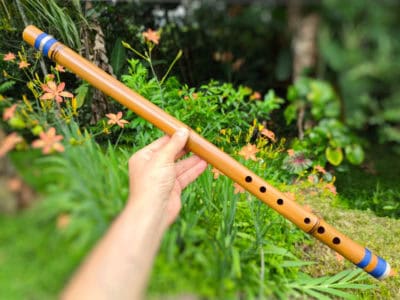


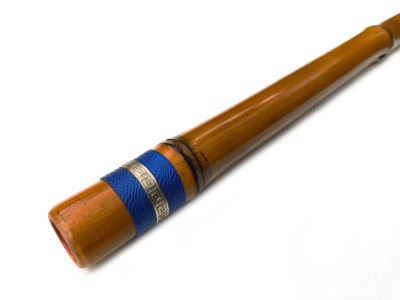
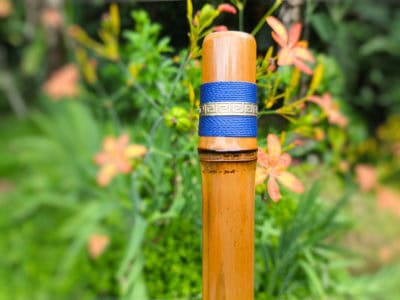
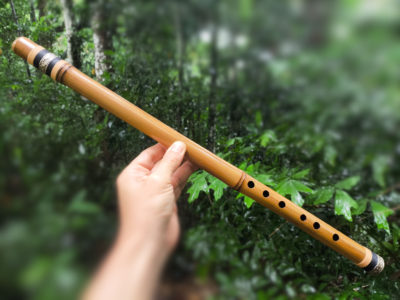
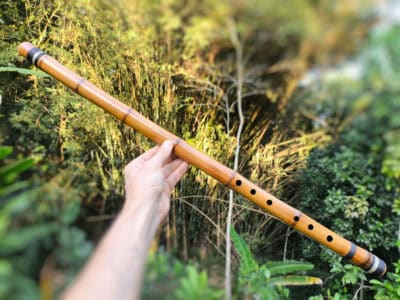
The Ney or Nay Flute is a development of the Kawala flute for adaptation to Arabic music. The Ney flute has 7 holes, one on the back. Its tuning is adjusted for Arabic oriental music, which makes use of 1/4 tones. The sound is produced by tilting the flute under the lips, forming an angle over the edge of the mouthpiece; it requires embouchure training and air projection to produce a satisfactory sound, being possible to reach 3 octaves with ease and up to 4 octaves with skill. When we master the embouchure, it becomes an extension of the voice! It is one of the oldest, simplest, and most powerful flutes that exist. The Ney flute was played by Egyptians thousands of years ago, with its use documented in tomb paintings around 2700 BC. There are basically three styles of Ney flutes: Egyptian Ney (Arabic), Persian Ney, and Turkish Ney.
The term “Ney” (or Nay) refers to the traditional rim-blown flute of the Middle East. “Ney” is the most widely used international spelling, while “Nay” is an alternative transliteration from Arabic. Both names designate the same instrument.



1 review for Arabic Ney Style Flute – D (Rast C)