



 $
$It is likely that the pífano as we know it today arrived in Brazil probably through the hands of Jesuit missionaries and Portuguese military personnel, being subsequently introduced to the indigenous peoples. To the hinterlands, it was carried by mixed-race populations, around the 1500-1600 period. Currently, there are hundreds of bands throughout Brazil, largely composed of descendants of the first pífano players from centuries ago. It is interesting to note that the pífano was introduced to the population through two paths: the indigenous path, which dates back to the colonization period, from the introduction of the pífano by the indigenous peoples, and the second path – in Minas, for example, where it is linked to Black people, without any indigenous trace and with a military touch.
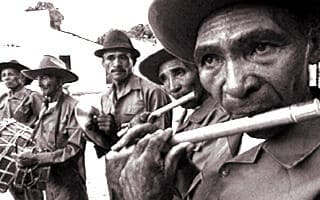
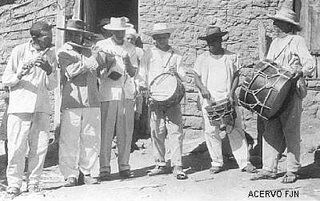
Nowadays, it is possible to find pífano bands in a large number of cities in the Northeast, northern Minas, notably in the interior. In the capitals or large cities, the same tradition is no longer preserved. These groups are known by various names, depending on the region where they operate: Banda de Pífanos, Banda de Pife, Música de Pife, Zabumba, Cabaçal, Esquenta-Mulher, Banda de Negro, Terno, Banda de Couro (Goiás), Musga do Mato, Pipiruí (Minas Gerais). Just as their name varies, the composition of these bands also has noticeable differences, but they are basically composed of two pífanos, one surdo, one tarol, and one bombo or zabumba.
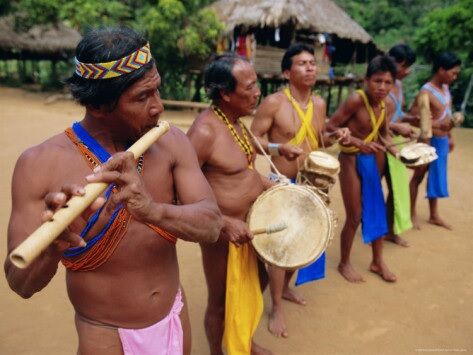
Indigenous peoples of Brazil made, and still make, flutes from taboca bamboo. This is an instrument that has a strong presence among the various Brazilian indigenous ethnic groups. Other countries such as Bolivia, Peru, Uruguay, Mexico, and Colombia also have in their musical culture wind instruments identical to Brazilian pífanos, but with other names. Besides these, very similar instruments are found all over the world, such as the Japanese shinobue, nohkan, and ryuteki, and the Indian bansuri.
“The sound of the pife came from the forest. It came from the indigenous people and was passed down from generation to generation.” João do Pife, pifeiro from Caruaru
Novenas
There is a relationship of affinity and dependence between pífano bands and Catholic rites, mainly during the time of novenas – gatherings for prayers, held over a period of nine days, in devotion to the Holy Trinity, the Virgin Mary, angels, or saints. In the Northeast, novenas occur practically throughout the year. Among the most celebrated are Saint Sebastian, Saint Joseph, Saint Anthony, Saint Lucy, Our Lady of Lourdes.
The repertoire played consists of benditos, prayers, often accompanied by devout women and devotees singing in Latin. In novenas, the band is of great importance – from the opening moment, in the raising of the flagpole, until the end of the nine days. Religious festivals help in the safeguarding of pífano bands and in the family budget of the musicians. “A novena without a pife band is almost a funeral,” says José Cesário, from the Frei Damião band, from Tabira, in the hinterlands, 400 kilometers from Recife.
Recently, the pífano has lost its more religious connotation and has become part of other manifestations. It became the embryo of musical genres linked to forró, is present in carnival blocos, and has been introduced into the commercial music market, gaining space through records, CDs, videos, shows, digital media, etc.
Pifeiros
I make pife, play pife, sell pife, eat with pife money, and when old I become pifado – João do Pife
The pifeiro is a self-taught musician, knows the songs, the melodies orally, many of them created by himself, by other bands, or by someone he knows and knows by ear. Generally, he is a member of a family of pifeiros, or is within a community where he learns by ear. His references are visual and auditory. The members of the bands are, for the most part, rural workers who engage in subsistence agriculture on their small plots. They are simple people who deal with the countryside, crops, livestock, situated at a sometimes less privileged social level. But this is not a characteristic only of pifeiros because also, in the past, those who played in music bands were slaves who did other services and played various instruments. From some time ago, urban pifeiros have also emerged who learned the pífano through records, CDs, and other media.
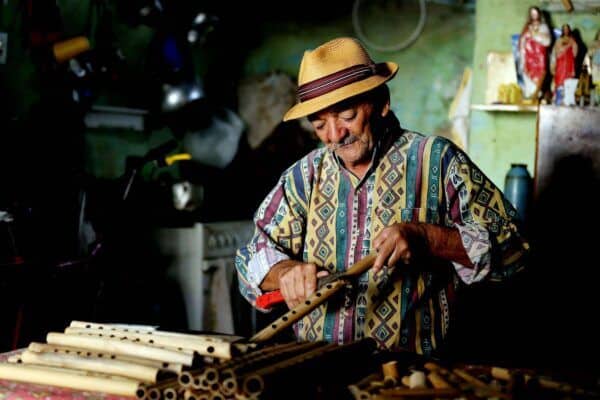
Some of the most famous pifeiros are those who are part of the ancestral history of this instrument. João do Pife, from the Dois Irmãos band is an icon of pífano bands in Brazil, has played in more than 27 countries. According to him:
the pife musician, to become a master, must make, play, and teach everything about the instrument.
Born in 1943, João do Pife learned to play and produce bamboo pífanos with his father in childhood, while working in the fields, and still maintains today the Banda de Pífanos Dois Irmãos created by his father in 1928. Currently, he is a master, teaches how to build the instrument based on standard measurements, probably inherited from his ancestors. This practice is guided by an oral culture, transmitted to his disciples. However, this experience ends up not being accessible and does not allow for greater propagation of this knowledge to a broader audience.
Musicians such as: Edmilson do Pífano (PE – Banda Flor de Taquary), Zé do Pífano (PE- Banda de Pífanos de Caruaru), Chau do Pife (AL) and Alfredo Miranda de Viçosa do Ceará (CE), Anderson do Pife from Caruaru (PE). Tell very similar stories to the story of Master João do Pife, where learning happened as a child, passed down by their ancestors, and they recount that the instrument has been present in the family culture for generations.
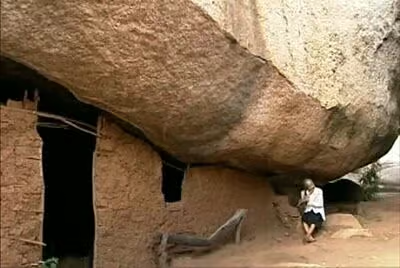
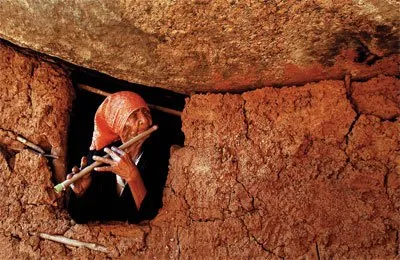
But among all these icons of folk music, one woman was a character of fundamental importance in the propagation of the pífano in Brazil. Izabel Marques da Silva, better known as Zabé da Loca. A woman who broke all paradigms related to this culture that had always been predominantly male. Her work was discovered and recognized by the rest of the country when she was already 79 years old (2003), but Zabé started playing at 10 years old. Coming from a family of farmers and flutists, she learned the instrument from her brother. For these people accustomed to putting their hands in the earth and understanding the cycles of nature, their roots are their foundation and music is part of those roots. A pifeira of body and soul, Zabé loved to play, dance, and have fun, she even played in environments that were theoretically forbidden for women. Her firmness and joy were so great that no one would question it. For her, life was always perfect and abundant, even with all adversities, she had no time to complain. Despite an enormous musical richness and contagious joy, Zabé lived a simplicity that impressed even her fellow countrymen from the hinterlands. The flutist understood like no one that one needs little to be happy. She had 3 children from her only marriage and soon became a widow, she did not always have food to serve her children. At a certain point in her life, her simple mud house was destroyed after a storm, so Zabé went to live under a rock. There she built her new home and lived for decades. Hence comes the “Loca” in her name, a designation given to this type of dwelling inside rocks. This simple little house inside a rock became the symbol of this warrior woman ahead of her time. After being discovered, the artist traveled the whole country bringing her art and at 85 years old received the Revelation Award of Brazilian Music. Zabé da Loca lived until 93 years old (2017), and still enchanted all of Cariri with her joy.
The Pife Today
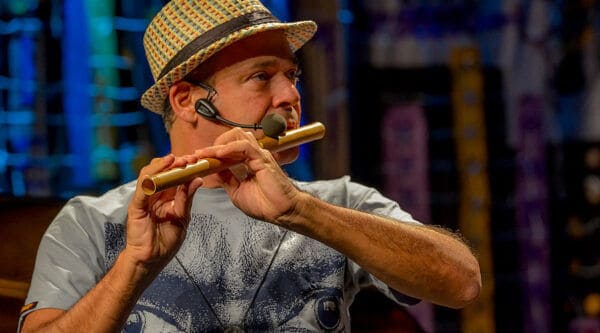
Interest in the beautiful and exotic sound of the pife has been growing. The renowned multi-instrumentalist Carlos Malta modernized pífano bands with his work “Pife Muderno” bringing this musicality from the Northeast to Rio de Janeiro. Carlos Malta played for a long time with Hermeto Pascoal who is from Alagoas, and who influenced him greatly. Also in Rio, we have the bloco “Tupife” that brings all the joy, theatricality, and magic of Northeastern folk culture to the Rio carnival. In Botucatu, São Paulo, the Pife movement is led by Zé Cláudio, also having the Bloco de Pífanos that animates the São Paulo Carnival. In Campinas, Carlos Valverde is the one who rescues this culture. In Minas Gerais, we have the group Cataventoré, the group “Cor de Fubá,” and in Uberlândia there is another group called “Pifarinha,” which even recorded a CD. Further south, there are reports of pifeiros in Paraná and Rio Grande do Sul. The Pífano seems to be spreading throughout the country.
The making of the instrument has also undergone updates. The instrument that in the culture of the North and of the indigenous peoples was originally made of taboca, a plant from the bamboo family. And that in some cultures may have even been made of bones, today can also be found made of aluminum and PVC.
A Little More About Its History
Pífano bands are composed of wind and percussion instruments, but this definition seems to have started from the 1960s, because until that time they were called Zabumba or Cabaçal. The name band was probably an influence of rock bands that started in the 1960s. Bibliographic information about the emergence of pífano bands in Brazil is scarce and contradictory. Certain authors support the European origin of these formations, others the African, and others claim they come from the indigenous milieu.
It seems that the word pífano comes from German: Pfifer, which in that language means whistle. Which corroborates the European origin of this instrument, there are also pífanos in France and England (in military music).
In Larousse, Encyclopedia of Music, we also find mention of the existence of pífanos in European Antiquity:
In France, wind instruments formed part of the constitution of the Great Cavalry. Appropriating both metal and wood wind instruments, they were composed of oboes, bassoons, crumhorns, bagpipes, pífanos and drums, trumpets. We were able to verify that some of these instruments were used in the coronation of Louis XIV, and in the nave of the cathedral they probably produced a splendid sonority.
We can also verify the Portuguese origin of pífanos:
Shepherds, when guarding cattle, always carry a small flute which in Beira-alta is called pífaro (pífano). These flutes in some lands of Trás-os-Montes, where they are called fraitas, are very well engraved. (Melo, 1882, p.238).
Reports an in loco observation, made in Serra da Estrela, in Portugal, on September 4, 1916:
Near the shelter were two shepherds, (…). One of the shepherds plays pífano and the other sits on the ground, attentive to his companion’s music. (Melo, 1927, p.181).
Also describes the use of vime, a type of taquara or bamboo, for the making of pífanos:
(…), for example, in Barco (Fundão) [region of Portugal] they are made of vime, drilled with hot iron” (Oliveira, 1966, p.184). Still speaking about pífanos, Oliveira cites their use together with percussion: (…), in the body are the holes, in variable number according to the regions: in the North and in the eastern Trás-os-Montes, notably in Terras de Miranda, and in the Alentejo Alemtejan-Guadiana strip, they normally have three holes, two on the upper face and one on the lower, and are held and played with only one hand. This type is thus the only one that allows the simultaneous playing of the tamboril and the flute by the same person. (…) (Oliveira, 1966, p.183).

We can deduce that the pífaro was used in Brazil since the beginning of colonization and often accompanied by percussion instruments. We also note its use by indigenous peoples and Black people, peoples that formed the Brazilian population. Regarding its probable Black origin, besides the obvious observation about the extensive use of percussion by the peoples of Black Africa, Abelardo Duarte refers to an article from the Portuguese magazine Panorama entitled “Medieval Theater in São Tomé and Príncipe,” in which its author, Fernando Reis, describes the orchestra that accompanies the said auto:
The orchestra is constituted by three skillful players of bamboo flute, by two or three players of sucalo or sucaia – corruption of chocalho (…). (Duarte, 1974, p.122).
This African orchestra with a formation very similar to pífano bands makes us reflect on this probable kinship. We cannot specifically affirm whether the origin is from a certain country, region, or cultural group. The Portuguese ensembles of percussion and rustic flutes; the use, by Brazilian indigenous peoples, of taquara and bone flutes and membranophones from the African tradition provide us with characteristics present in cabaçal ensembles (pife bands). But the most sensible thing would be to say that elements from these three musical cultures amalgamated and formed the cabaçal ensembles of Brazil, making it clear that the flute is intimately related to our people and to all our cultural mixture.
References:
- Brazilian Pife
- Research on the Pife
- Pífano Bands
- Rede Brasil
- BANDA DE PÍFANOS DE CARUARU Uma análise musical – Master’s Thesis by Carlos Eduardo Pedrasse for the UNIVERSIDADE ESTADUAL DE CAMPINAS – INSTITUTO DE ARTES

Knowledge of Native Flute
When breath becomes sound: breathing, flute, and inner state
See MoreJun
The flute as a practice of presence: playing is also listening
See MoreMay
Improvising on the flute: where to start without getting stuck
See MoreMay
How to improve the sound on the flute with small adjustments
See MoreMay
Breathing on the flute: the most common mistake that blocks the sound
See MoreApr
First sounds on the flute: what really matters at the beginning
See MoreApr
Which flute to choose to start? An honest guide for beginners
See MoreApr
Jazz, Modal Music and the Art of Improvisation
See MoreJun