



 $
$Featured
F#


(20) SFr 63.00
-25%
G
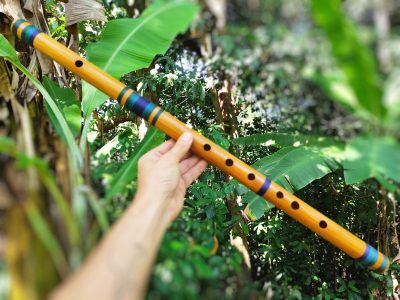
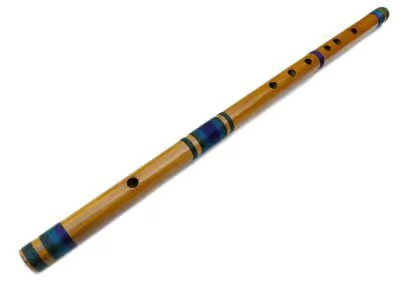
(7) Original price was: SFr 118.00.SFr 89.00Current price is: SFr 89.00.
E
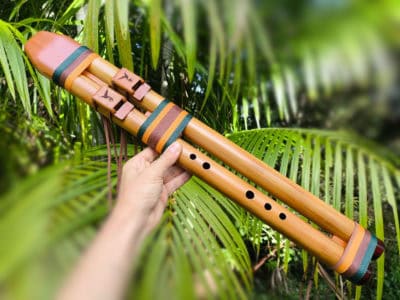
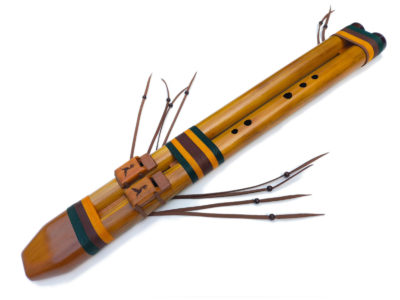
(1) SFr 135.00
B


(1) SFr 96.00
Modelo Novo


(1) SFr 79.00
D
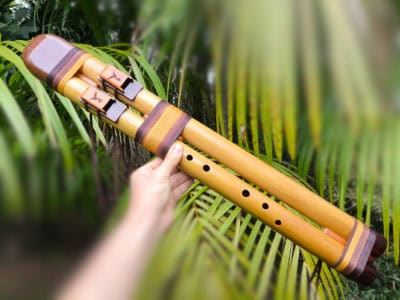
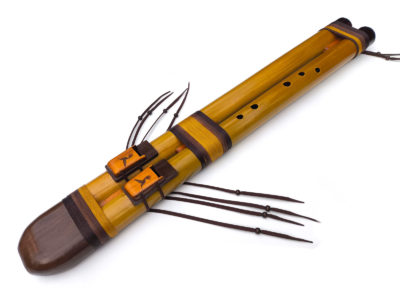
(4) SFr 152.00
Modelo Novo
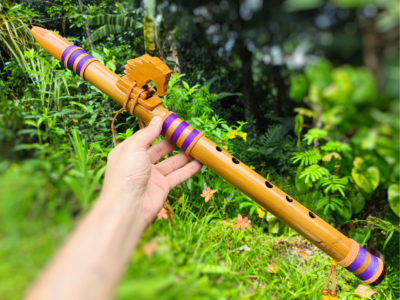
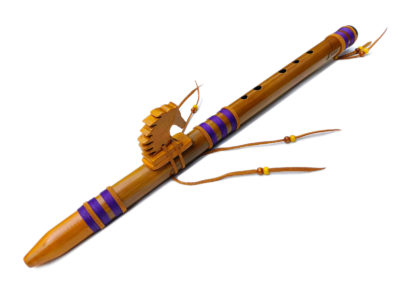
(4) SFr 79.00
A
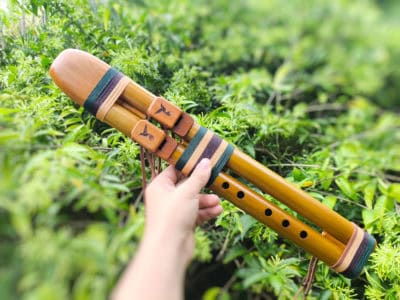

(16) SFr 108.00
Not at all! The Native American flute is famous for its ease and for allowing spontaneous musicality. Its minor pentatonic scale sounds good in virtually any combination of notes, which encourages experimentation and intuitive creation. More than “hitting the right notes,” the native flute is an instrument of expression, connection, and meditation.
For a first contact, we recommend starting with a flute that is easy to produce sound and that adapts well to your body. Main Recommendation: The River Cane Series Native Flute or Native Flutes from series with a totem (like the Classic or Tribal) in medium/high tunings. They have a whistle system (fipple) that makes sound emission easier.
Recommended Tunings: Choose shorter flutes, such as those tuned in F (F), G (G), A (A), or B (B). They require less finger stretching and less breath control. The tuning in F sharp (F#) is considered the classic and most heard tuning of the native flute.
Avoid low flutes at the beginning: Models like the Ground Series (Bass) are powerful, but require more practice due to their size and the need for greater airflow.
Another whistle flute that is very good for starting is the Whistle style flute. The whistle has easy sound emission, in addition to producing the diatonic scale in two octaves, being suitable for musical study.
The other flutes require embouchure practice, such as bansuri, pífano, xiao, shakuhachi, etc… They are powerful flutes, but require more practice time.
The vast majority of our flutes are made to order. The flutes in our catalog are reference models for you to customize and order yours. We believe that each instrument is unique and should be created with special energy and attention for the flutist. The production time varies according to the complexity of the model (generally 40 to 90 business days) and is stated on each product page.
However, we have some models available for faster shipping, within 10 business days, which you can check on this page.
We accept several methods for your convenience, such as PIX and bank slip, with a discount, credit cards in full or in installments, and Bitcoin – the currency without borders.
The order is approved and released to the production queue after payment confirmation, and the shipping time starts counting from its approval.
We offer a wide variety of flutes, each with a unique story and sound. Here are the main families:
The difference lies in the reference frequency of the note A, which serves as the basis for tuning the entire instrument.
The vast majority of musical instruments are currently tuned based on the A reference at 440 Hz, so we name it the standard, professional, or concert reference. For playing with other instruments or music, it is more suitable.
On the other hand, currently, the 432 Hz frequency has been widely used in therapeutic contexts; there are studies that point to 432 Hz as a natural harmonic reference with the frequencies of nature and the planet. Many people choose this reference when the intention is to play the flute for meditation, yoga, therapies, and activities that do not depend on other simultaneous melodic and harmonic instruments.
In summary: to play with others, choose 440 Hz. For solo use and therapeutic practices, 432 Hz is a wonderful option. The audible difference is subtle when the flute plays alone.
5 Holes: It is the traditional number for playing the minor pentatonic scale, the base scale of the Native American flute. It is simple, direct, and perfect for beginners, allowing countless melodic possibilities without distractions.
6 Holes: It is a modern adaptation that adds a “wildcard” hole to expand musical possibilities. With it, it is possible to play other scales (modes) using cross fingerings. However, for a beginner, the additional note (major 6th) may sound strange in the minor pentatonic scale. The 6-hole flute requires learning specific fingerings to take advantage of its potential. We offer both options so you can choose your musical path.
5 Holes + Thumb: The option of a 5-hole flute with a thumb hole is a recent variation we added to extend the native flute’s scale into the high range. The thumb hole note produces a tone above the highest note that ends the octave. For example: an F# flute has its octave at high F#, and the additional thumb hole note produces the G# note.
7 Holes: The 7-hole flute option combines the 6-hole flute with the thumb hole. Recommended for more experienced users who wish to explore more melodic possibilities.
The alignment of the last hole is an ergonomic adjustment to ensure that your pinky (or ring) finger reaches the last hole comfortably. This feature is most needed on longer flutes.
Note: When requesting offset alignment on Bass/Low flutes, the ring finger hole for each hand will be shifted.
To our ears, the timbral difference is imperceptible. What changes is the relationship with the material:
Bamboo: It is a living, sustainable, and traditional material. Each flute is unique, as it follows the natural characteristics of the stalk. It requires more care with humidity and temperature (like warming it up before playing), but it is our choice for its ancestral connection and lightness.
Wood: Offers greater mechanical stability, being less susceptible to climate variations, which facilitates stricter tuning control. It is more resistant to impacts, but its production process is more industrial and generates more waste.
The soft sound and the deep breathing required to play it naturally induce a state of relaxation. Benefits include:
It is a powerful tool for “sound healing” and music therapy.
Yes! We believe that the music of the flute is for everyone, and we offer support for your journey.
For more information, visit our page here. Or get in contact.
