



 $
$There is a scale that has increasingly proven to be part of the evolution of the world. This scale is the pentatonic! It seems to be one of the oldest and most used scales on the planet. The word “pentatonic” comes from the Greek word “pente” meaning five and “tonic” meaning tone. Simply put, the pentatonic scale consists of five notes within an octave, which is why it is sometimes also called the five-tone scale or five-note scale.
Pythagoras (570 – 495 BC) was one of the first people to make a scientific study of the tones that seem to occur naturally in the world and may have been the first person to systematically investigate the pentatonic scale, but thanks to a series of recent archaeological discoveries, we now know that the use of the pentatonic scale predates by thousands of years any and all recorded studies on music.
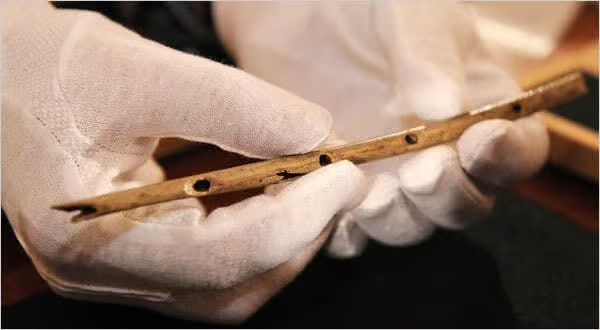
In 2008, in southwestern Germany, in a region known as Swabia, archaeologists found flutes made from vulture bones during excavations. These flutes have five finger holes and were incredibly tuned to the pentatonic scale. After analyses by researchers, it was found that the flutes date back 30 to 40 thousand years, a period before writing.
The pentatonic scale is the backbone of Japanese and Chinese music. Many say it may have originated in China, and it is definitely there that some of the oldest and deepest studies on the medicinal power of music are found. Confucius (552 – 489 BC) was one of the greatest thinkers and philosophers in Chinese history. He is believed to have authored some Chinese Classics, among them the Book of Rites, whose chapter 19 was entirely dedicated to music and its therapeutic potential. According to these ancient studies, music is related to the five elements of Traditional Chinese Medicine (Wood, Fire, Earth, Metal, and Water). Each element is represented by a musical note (Wood – E, Fire – G, Earth – C, Metal – D, and Water – A), forming a pentatonic scale. The ancient studies and records from the Confucian period demonstrate a great depth in the use of music as a therapeutic and spiritual tool.
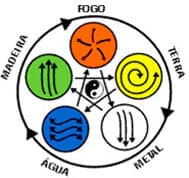
*There are scholars who believe that Pythagoras was in China and India and that his theories may have been influenced by these cultures
The Hindustani Ragas
The “raga” is a melodic form, but it is not just a scale. There are about 72 parent scales. And each scale has hundreds of ragas, which can be pentatonic (five notes), hexatonic (six notes), or complete scale (seven notes). The possible combinations are infinite. (Ravi Shankar)
Indian Classical Music is known for its enormous cultural variety, for its music with a complex microtonal system, a musical characteristic more easily found in Asian music, which makes it a music with a complexity superior to Western music. Each region of India has its particularities; in the North, classical music is called Hindustani, and in the Southern tradition, it is called Carnatic. Ragas are a melodic system very common among the Northern traditions, and the pentatonic scale is commonly found in the traditions of this region, being played both in ascending and descending scale. The pentatonic scale is present in ragas with less complexity, favoring the search for intuitive musicality.
Latin American countries present a strong musical culture linked to the pentatonic scale inherited from ancient pre-Columbian peoples. This heritage comes from the Incas, Aztecs, and Mayans, and their music was based on the pentatonic scale. Pre-Hispanic instruments are known as autochthonous instruments, and the most commonly used were flutes, ocarinas, sikus, whistles, rattles, and drums.
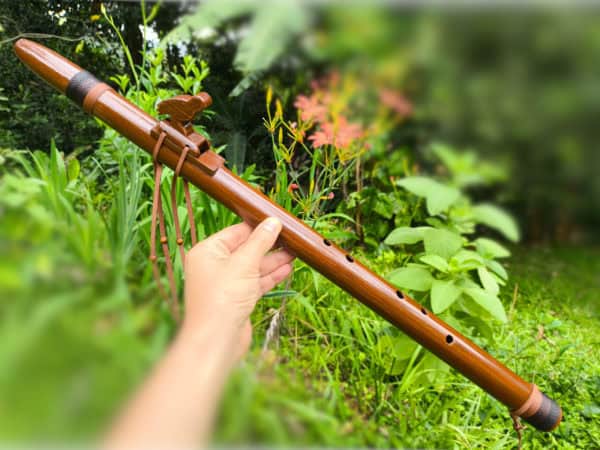
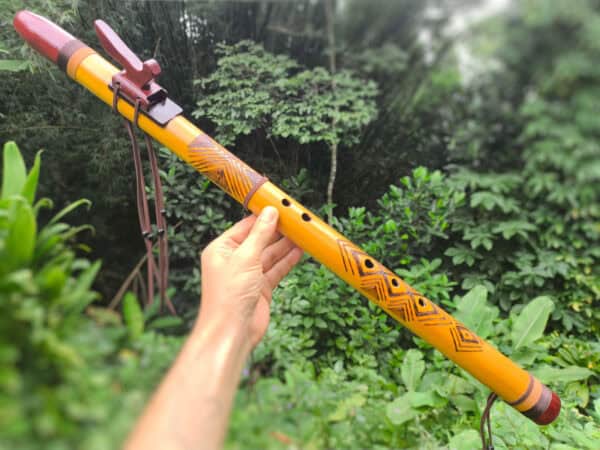
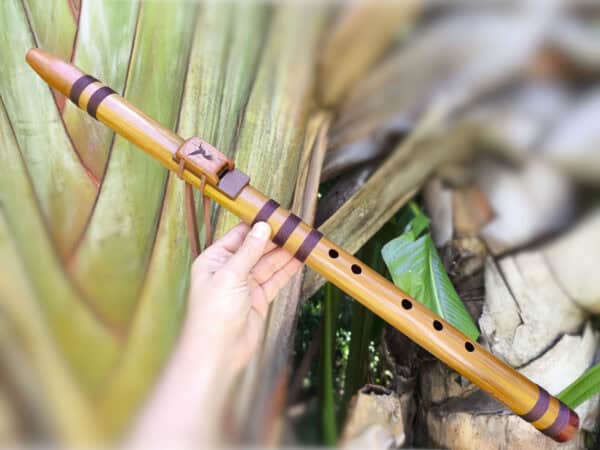
The ancestral music of North American countries also had diverse influences. The native peoples who inhabited Mexico seem to have had great participation in all the musicality of North America. The music of these peoples also relates to the pentatonic scale, in songs, percussion instruments, and especially in the Native American Flute. A flute with a powerful sound, but with a simple execution, an experience that aligns with the philosophies of ancient native peoples, who did not follow specific metrics but their intuition.
Archaic evidence demonstrates a possible relationship between the origin of the American peoples and the arrival of Asians during the Ice Age, through the region now known as Alaska.
Could this possible Asian ancestry have brought some musical influences to the peoples of all the Americas?

Researching a little more about the cultural relationship between Asia and America, some traces of this ancestry began to appear. An interesting example of this possible intercontinental musical relationship is the Native American Flute and the Japanese Shakuhachi Flute. Both are vertical flutes and not transverse (like the vast majority of flutes around the world), and both flutes are pentatonic. There are so many similarities between them that suspicions regarding the relationship between their origins cannot be disregarded.
Pentatonic scales are very common throughout the world, including in Middle Eastern and Celtic music, Hungarian folk music, the music of ancient Greece, and the music of southern Albania. It is the main scale in Ethiopian music and some other African peoples. It is present in the tuning of the Indonesian gamelan, in melodies from Korea, Malaysia, and Vietnam, in the Afro-Caribbean tradition, the Polish highlanders of the mountains, and many other peoples. It is even the basis for Gregorian Chant.
This scale has been crossing millennia accompanying the evolution and history of humanity. If we observe all the ancient and indigenous peoples of the planet, we will notice that they developed their musicality based on intuitive and spiritual experiences. Music was a ritualistic tool, and it makes sense to find the pentatonic scale at the origin of many peoples, since it is a simple and at the same time powerful scale. The true representation of detachment within the universe of music, demonstrating that its simplicity is the great secret of all its grandeur and omnipresence, as it demystifies music as an extremely complex tool and demonstrates that it can be played by anyone who feels the music coming from their soul.
References:
Cover art: Geenss Archenti Flores – instagram @geenssarchenti
- The mystical pentatonic scale and ancient instruments
- Overview of Pentatonic Scales in Music Theory – By Espie Estrella
- A 40,00 Year Old Flute and the Pentatonic Scale – August 04, 2016 – charlie pennel
- How to cite this paper: Zhang, H. and Lai, H. (2017) Five Phases Music Therapy (FPMT) in Chinese Medicine: Fundamentals and Application. Open Access Library Journal, 4: e4190.
- The Culture of Music and Ritual in Pre-Han Confucian Thought: Exalting the Power of Music in Human Life – By Barry D. Steben
- Indian Classical Music 101 With Ravi Shankar
- Indian classical music
- Latin American Music
- Amerindian Peoples
- Native American Flute
- Native American Flute Meditation: Musical Instrument Design, Construction and Playing as Contemplative Practice
- Pentatonic Scale





Knowledge of Native Flute
When breath becomes sound: breathing, flute, and inner state
See MoreJun
The flute as a practice of presence: playing is also listening
See MoreMay
Improvising on the flute: where to start without getting stuck
See MoreMay
How to improve the sound on the flute with small adjustments
See MoreMay
Breathing on the flute: the most common mistake that blocks the sound
See MoreApr
First sounds on the flute: what really matters at the beginning
See MoreApr
Which flute to choose to start? An honest guide for beginners
See MoreApr
Jazz, Modal Music and the Art of Improvisation
See MoreJun