$
$The Shinobue: A Bamboo Flute with Japanese Soul
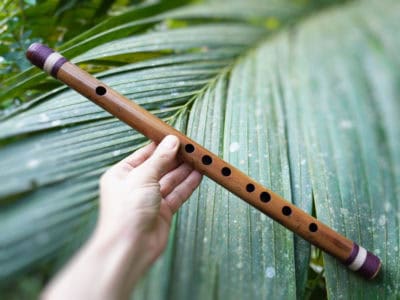
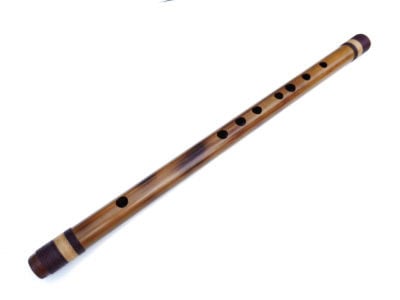
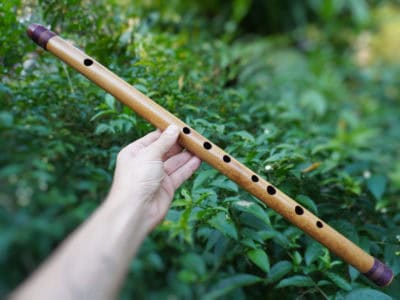
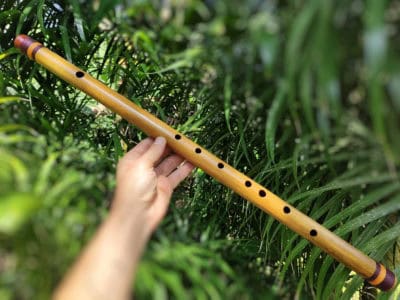
The Shinobue is a traditional Japanese wind instrument, specifically a transverse flute made of bamboo. Its soft and melodious sound makes it a fundamental piece in folk music and various artistic performances of Japan.
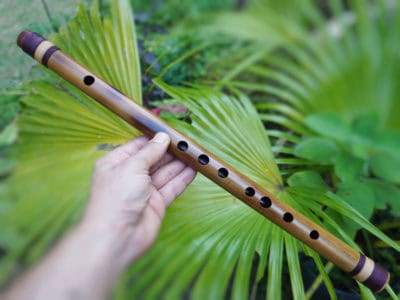
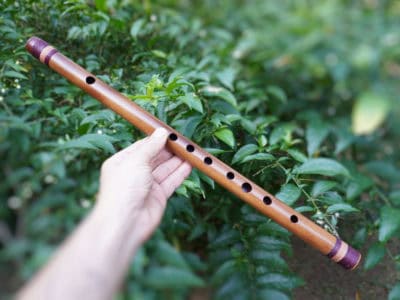
The word "Shinobue" originates from "shino", which refers to the type of bamboo used in its making, and "bue", which means flute. The Shinobue is characterized by its cylindrical body, finger holes, and a simple mouthpiece. The exact origins of the Shinobue are somewhat hazy, but it is believed to have developed from Chinese flutes, such as the Ryuteki, during the Heian period (794-1185). Over the centuries, the Shinobue adapted to Japanese musical taste, becoming an indispensable instrument in various artistic manifestations.
The Shinobue was frequently played at festivals (matsuri), accompanied by taiko drums (O-hayashi style), or together with the shamisen (Uta or Ongaku style). Its unique and expressive sonority made it popular among common people, in contrast to the Ryuteki, which was more associated with nobility. Despite its ancient roots, the Shinobue remains a living and relevant instrument in contemporary Japanese music. It is used in various compositions, from traditional pieces to more modern arrangements, and is appreciated by musicians and listeners of all ages.
Shinobue Tuning Types:
O-Hayashi Tuning: The Free Tuning for Festivals. The O-Hayashi tuning is the most traditional and free, meaning it does not follow a fixed scale. Each instrument may have a slight variation in tuning, creating a more organic and natural sound. It is commonly used in festivals (matsuri) and traditional dance accompaniments, such as lion dances. The flexibility of O-Hayashi tuning allows musicians to adapt to the rhythm and energy of the performance.
Ongaku or Uta Tuning: The Scale Tuning for Solos and Accompaniments. Unlike O-Hayashi, the Uta tuning follows a fixed scale, usually in A, B, or C. This allows the Shinobue to be played together with other instruments, in more elaborate musical pieces, in solos or shamisen accompaniments.
Sol'fa Tuning - Tempered System (DO, RE, Mi...): This is the tuning we use in the production of our Shinobue-style flutes. It is a UTA tuning adapted to the Western tempered system standard, precisely tuned in a fixed intervallic structure, so that each semitone has the same distance and can be played with other Western instruments easily without needing to adapt embouchure or fingering.