



 $
$
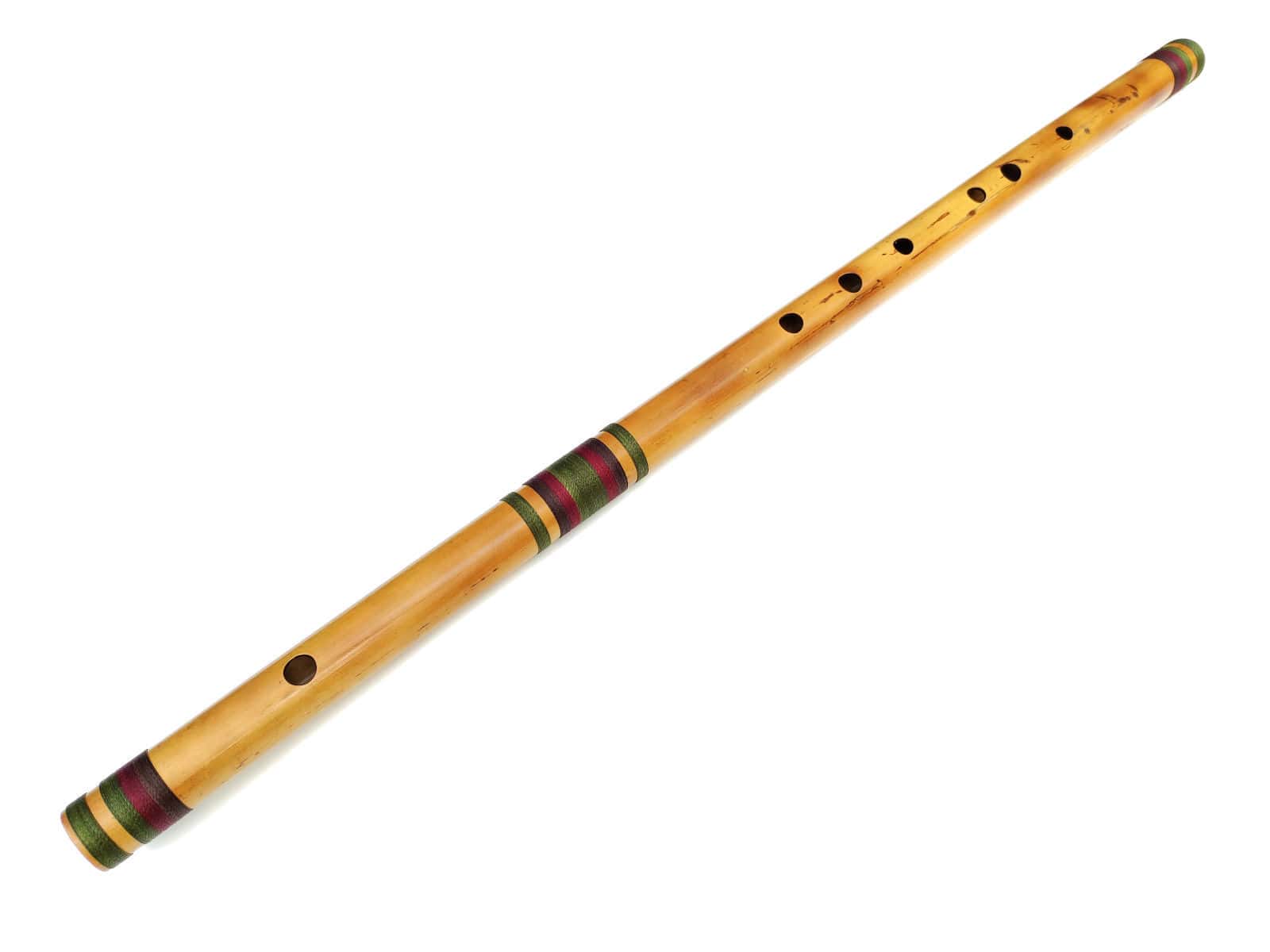
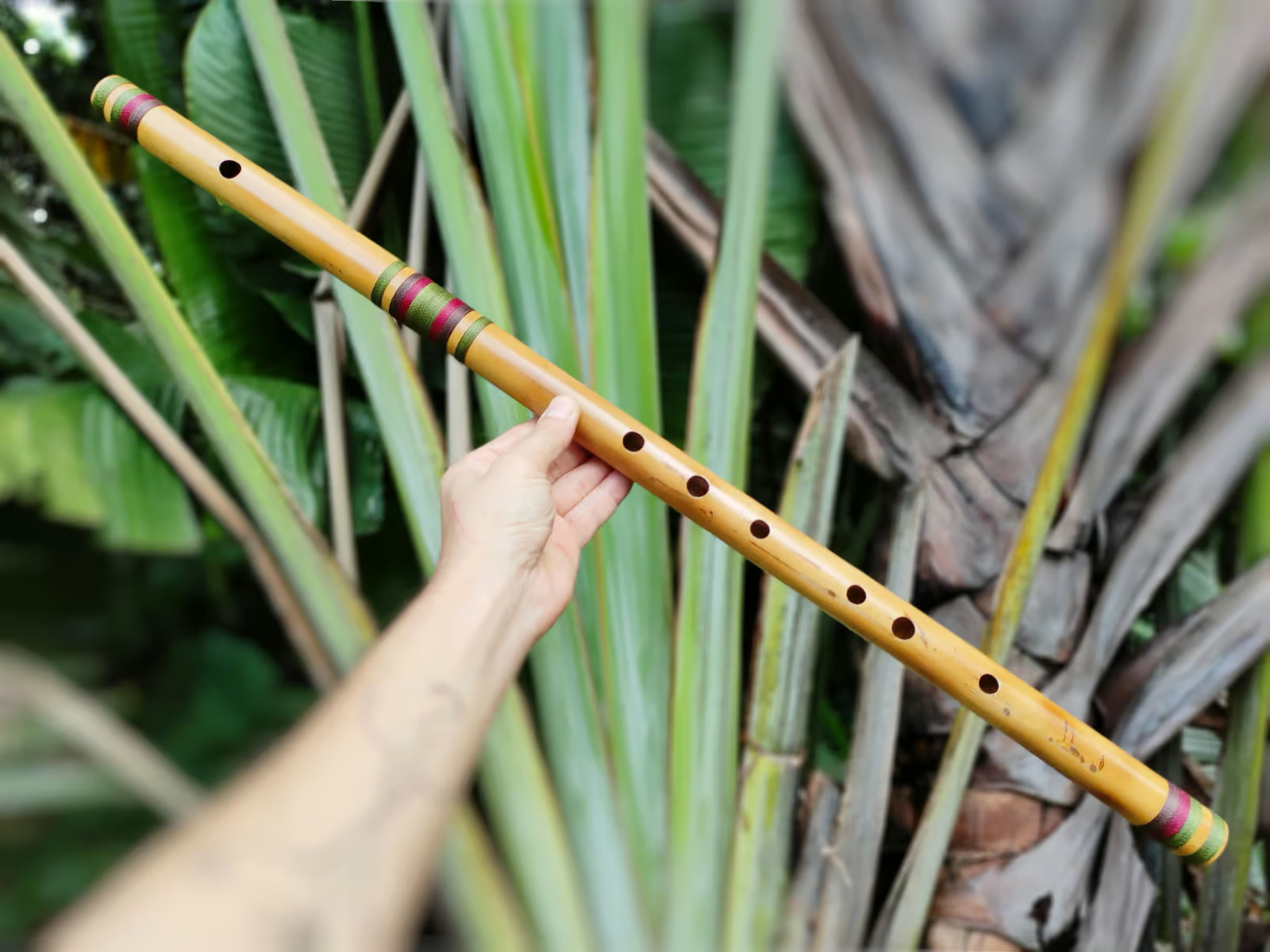



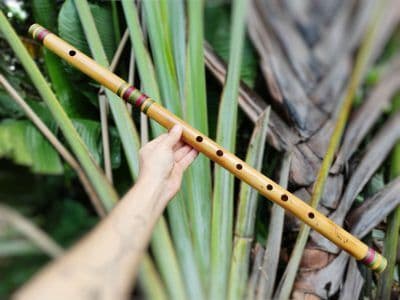


Bansuri (Hindi: बांसुरी) (Bangla: বাঁসুরী) is a transverse flute native to India, Pakistan, Bangladesh, and Nepal, made from a single piece of bamboo with six or seven holes. An ancient musical instrument associated with cowherds and the pastoral tradition, it is closely linked to the love story of Krishna and Radha, and is depicted in Buddhist paintings from around 100 AD. The word Bansuri originates from Sanskrit [bamboo] + swar [musical note].
Bansuri in the North and Venu in the South of India are the flutes associated with Lord Krishna and are linked to spiritual awakening, a call to devotion. Stories depict Krishna's Bansuri as having an enchanting effect not only on the women (gopis) but also on the animals of the region.
The Bansuri is one of the best instruments to express the emotional subtleties of Indian ragas; the pure and rich tones of the Bansuri are like a continuous prayer, with the ability to deeply calm and open the hearts of both listener and flutist.
The movement of the Bansuri in Indian classical music was relatively recent; Pannalal Ghosh (1911-1960) pioneered the low-pitched versions of the Bansuri and brought the instrument from folk use to the classical music stage. The Bansuri has since been further elevated by the world-renowned brilliance of Hariprasad Chaurasia. The Bansuri has been an indispensable part of Hindustani classical music for over half a century.
Making Bansuri flutes is a beautiful art. The bamboo suitable for making a Bansuri must possess many qualities; it must have straight walls with a uniform circular cross-section, free of knots, so the selected bamboo needs long spaces between nodes. Being a natural material, it is difficult to find bamboo shafts with all these characteristics, which in turn makes good bansuris rare.


















2 reviews for Bansuri Ashar - Indian Bamboo - F Low